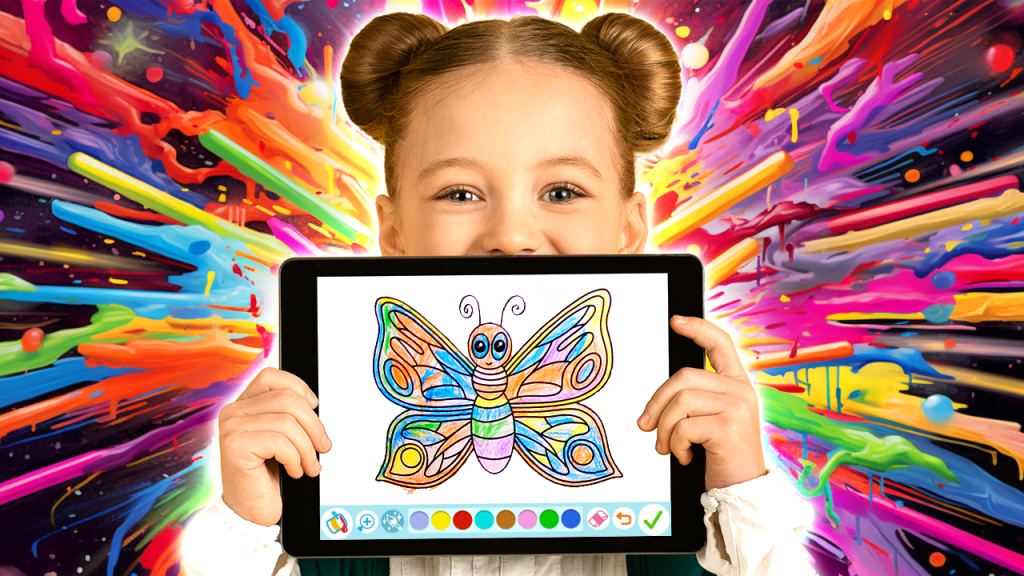
Amid the digital transformation of everyday activities, the traditional coloring book has evolved into a dynamic educational tool that extends far beyond the confines of paper and crayons. Digital coloring books and art apps are not only revolutionizing how children engage with art but also serve as multifaceted platforms for learning across various subjects.
A Canvas for Artistic Exploration
Digital art books offer an expansive palette of colors, brushes, stamps, stickers, and textures that traditional mediums cannot match without great expense (and often greater messes to clean). Within digital crafts, children can experiment with color mixing, blending, and shading. For instance, they can learn about primary, secondary, and tertiary colors by mixing hues on a digital interface, understanding how colors interact in a practical, hands-on way.The ability to manipulate shapes and perspectives with digital tools also introduces foundational concepts in geometry and spatial awareness. Tools that allow them to undo, retrace their steps and immediate visual feedback as experiment with new creative processes and techniques.
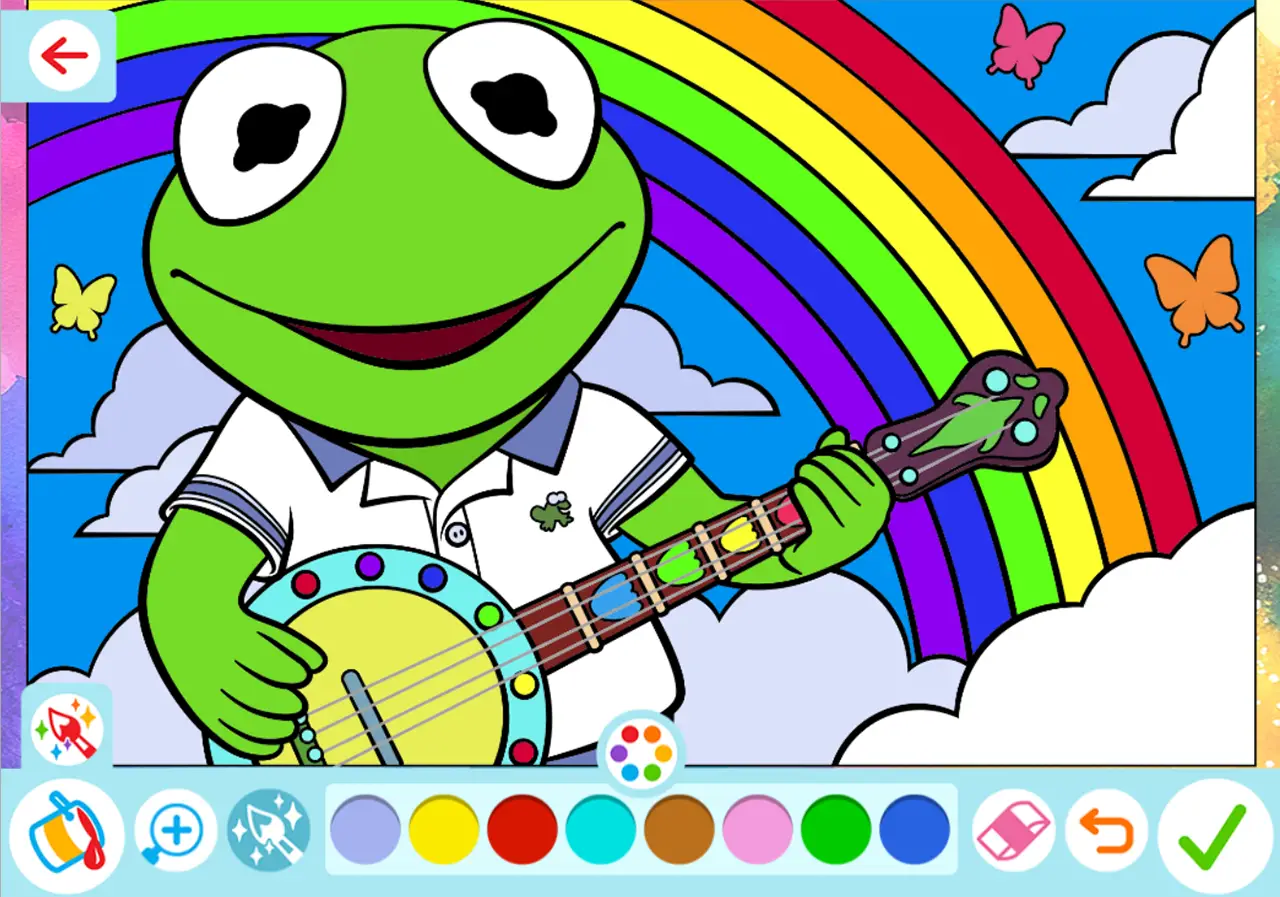 Disney Color Splash, developed by Workinman Interactive, is a fully digital art app featuring a wide assortment of coloring pages, brushes, color palettes, colorful stickers, and various art tools for unlimited creativity.
Integrating Educational Content Through Art
One of the most significant advantages of digital coloring books is the ability to incorporate educational content seamlessly into the artistic process. Coloring scenes can be designed to teach facts and trivia across a range of subjects. For example:
- Science and Nature: Coloring a desert scene can educate children about the flora and fauna that thrive in arid environments. As they color, the software can identify species, provide tips and facts about their natural colors and behaviors, or how those critters have adapted to harsh environments.
- History and Culture: Coloring pages depicting historical events or cultural festivals can immerse children in different times and traditions, fostering a global perspective. Scenes can be presented in a narrative context, providing background on the setting being worked on, and even the impact those historical events had on these places and the people of today.
- Geometry: Stamps and stickers of geometric shapes are a great way to hone spatial reasoning and leverage mathematics. Using a puzzle-like mechanic that snaps shapes into place, this kind of art activity can foster skills such as pattern recognition, problem-solving abilities, and creativity, as children experiment with different configurations and learn how shapes can combine in various ways.
- Color Theory: For instance, they can learn about primary, secondary, and tertiary colors by mixing hues on a digital interface, understanding how colors interact in a practical, hands-on way.
- Geography: Maps and landscapes can be transformed into coloring activities, helping children learn about countries, capitals, and natural landmarks. As kids color, they can learn about geologic features, cities, and boarders through active facts that play while they color. They can also snap completed countries and territories into place into a master-map, to master their knowledge of the globe and their relative position within it.
- Nutrition: Interactive food-themed coloring pages can teach kids about healthy eating habits, food groups, and the importance of a balanced diet. These coloring activities can be made interactive, where they take their completed artwork and set the table with a healthy breakfast or an occasional special treat.
By engaging with these subjects visually and interactively, while the software compliments their creativity with facts and feedback, children are more likely to retain the information and develop a deeper understanding of the material.

Dive into the Met, developed by Workinman Interactive, invites kids to create their own versions of classical artworks. They learn about the original work and its creator and play a quick game of picture “hunt” to teach them how to explore the details within art. Then, using stickers and brushes, they can create their own version while a narrator asks them contemplative questions about both the original work and their new creation. A wing of a virtual Met stores all their artworks for later viewing.
Enhancing Vocabulary and Language Skills
Digital coloring books and art apps can also be powerful tools for language development. Incorporating voice-overs and on-screen text allows children to associate words with images, reinforcing vocabulary acquisition. For instance, as a child colors a scene in a farm, tapping on different animals can trigger audio pronunciations and spellings of each creature’s name. This multisensory approach caters to various learning styles and can be particularly beneficial for early readers or children learning a new language. Tracing activities add a touch of creativity to learning character strokes, while repeated pronunciations by the software helps them associate the letter shape with the sound. It’s a far more active and engaging approach than practicing on lined paper.
Gamification and Interactivity for Deeper Engagement
The gamification of educational content within digital art apps enhances engagement and motivation and can serve as a hub to encourage continual and repeated play of more minute educational activities.. By integrating mini-games and interactive challenges of all types, children can unlock new art tools—such as unique brushes, color palettes, or animations—by completing educational activities. For example:
- Mathematics: Solving math problems can earn children new geometric shape stamps to incorporate into their artwork, linking numerical concepts with creative expression.
- Spelling and Literacy: Completing spelling challenges can unlock storytelling features, allowing children to craft narratives around their colored scenes.
- Science Experiments: Virtual lab activities can grant access to special effects that simulate natural phenomena like rain, snow, or volcanic eruptions within their coloring pages.
This reward-based system encourages children to delve deeper into educational content to enhance their creative capabilities, creating a synergistic learning experience, while they build up a vast tool set to expand their creative potential.
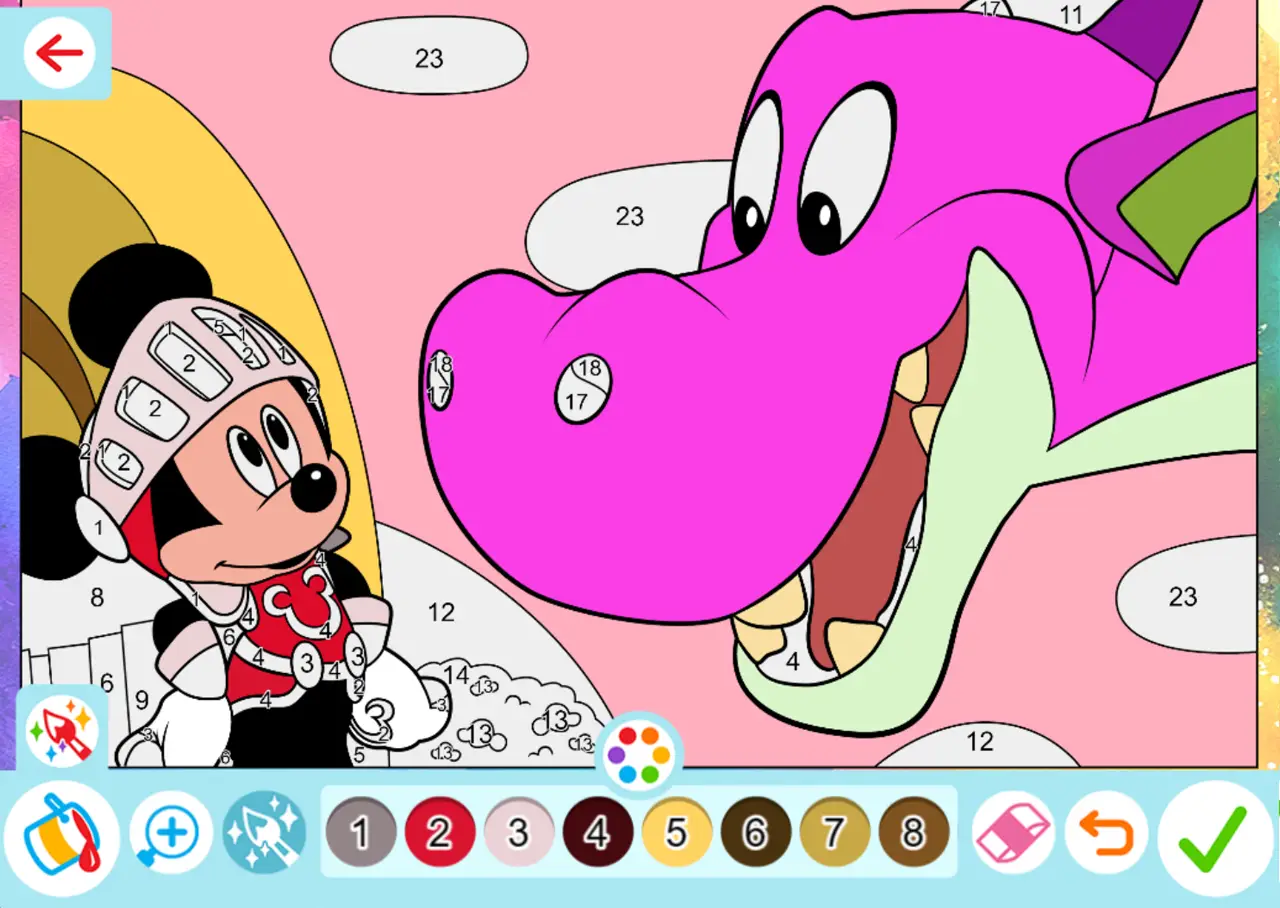 Color-by-number inherently reinforces basic number skills, but the scaffolding can easily be elevated for more advanced learners. Numbers on the artwork can be swapped out for math problems that increase in complexity as players advance.
Active Learning: Dynamic and Interactive Coloring Experiences
Unlike static paper coloring books, digital versions can offer animated and interactive pages. These features transform coloring into an immersive activity where children can manipulate elements within the scene. For example:
- STEM games: Children can color the objects they are asked to count, sort, and create patterns from. They can color, customize, and build habitats, all while passive facts play for them to learn more about what they help create.
- Environmental Awareness: Coloring a polluted river scene and then “cleaning” it through interactive elements can teach children about environmental conservation and the impact of human actions on nature.
- Music and Sound: Integrating musical elements allows children to explore sounds and rhythms by interacting with their colored instruments, fostering an appreciation for music.
These interactive experiences make learning active rather than passive, promoting critical thinking and problem-solving skills.
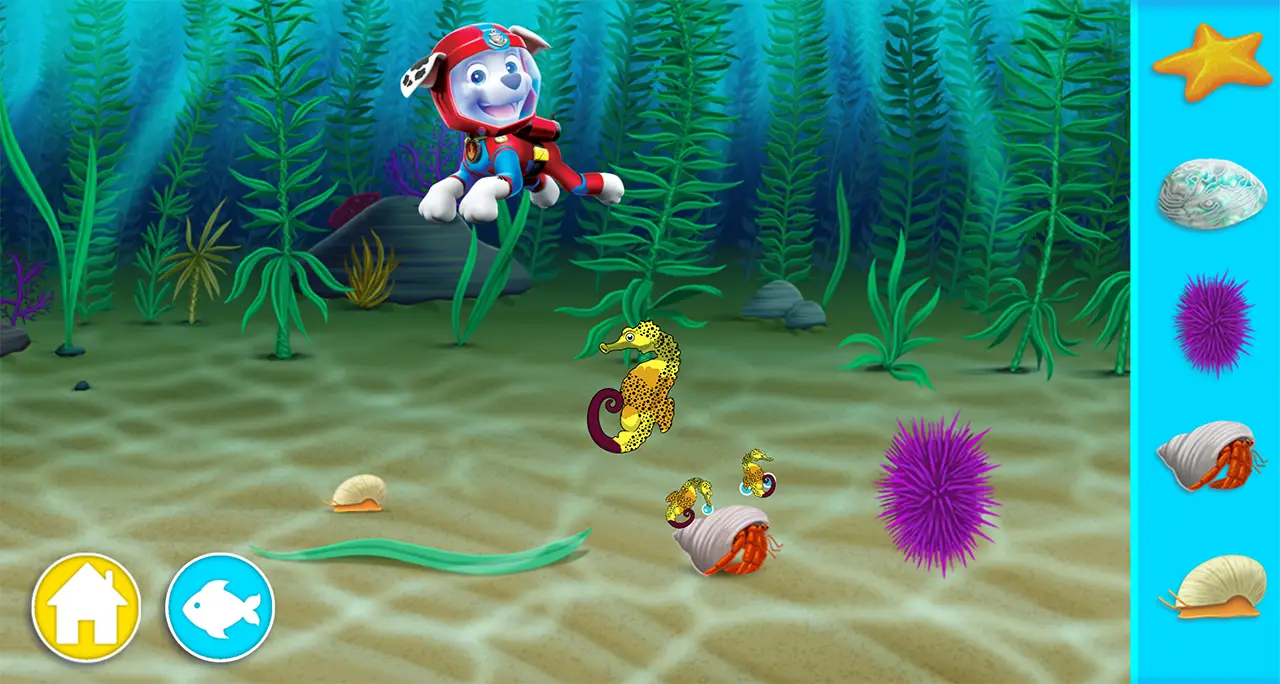
Noggin’s Oceans Color + Create, developed by Workinman Interactive, lets kids choose a habitat, color creatures native to it, and then add even more appropriate life to the environment, all while the game teaches them about the ocean ecosystem and its inhabitants.
Promoting Social and Emotional Learning (SEL)
Art has always been a medium for self-expression, and digital coloring books are uniquely positioned to support Social and Emotional Learning (SEL). Through guided prompts and interactive features, children can explore their emotions and develop self-awareness. For instance:
- Emotion Coloring: Children can choose colors that represent how they feel, creating artwork that expresses their current emotional state.
- Reflective Prompts: After completing a coloring page, the app can ask questions like “What made you choose these colors?” or “How does this scene make you feel?” encouraging introspection.
- Sharing and Discussion: Artwork can be saved and shared with parents, teachers, or therapists, facilitating conversations about emotions and experiences.
By integrating SEL into creative activities, digital coloring books support holistic development, nurturing both the mind and the heart.
Celebrating Culture and Encouraging Open-Mindedness
Digital coloring and art books provide opportunities for children to explore and celebrate diverse cultures and perspectives. They can personalize characters and settings to reflect their own backgrounds or those of others, fostering empathy and understanding. Examples include:
- Cultural Representation: Children can color scenes from stories around the world, learning about different traditions, clothing, and customs.
- Inclusive Characters: Apps can offer a range of characters with varying abilities, ethnicities, and backgrounds, allowing children to see themselves represented and learn about others.
- Creative Storytelling: By customizing protagonists and narratives, children can create stories that resonate with their self and experiences, enhancing engagement and personal connection to the material.
This cultural inclusivity promotes a more comprehensive educational experience, preparing children to navigate and appreciate a diverse world.
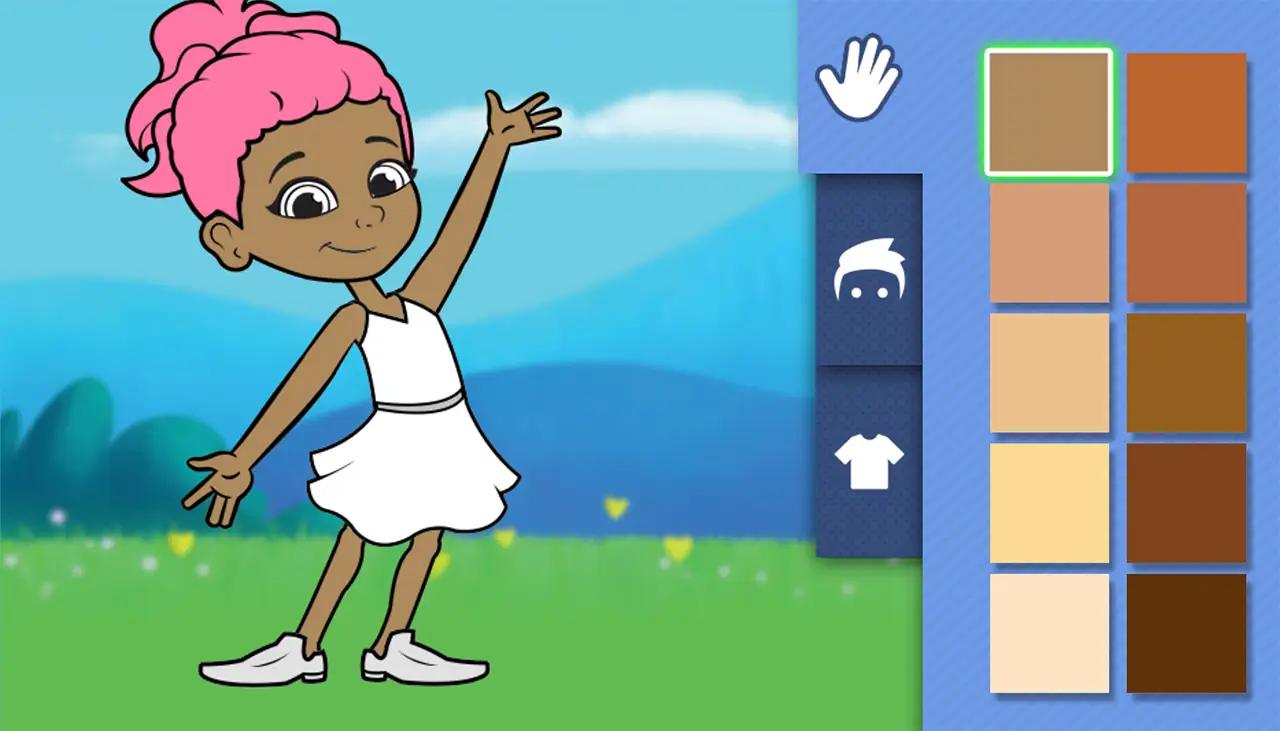 For Noggin’s Color + Create: Portrait maker, Workinman Interactive built a robust avatar builder that allows kids to create versions of themselves, family members, and friends. They can customize and color their look, choose an appropriate expression, accessories them with objects that represent their interests, and then pose them in a dynamic environment.
Expanding Horizons: Additional Educational Opportunities
Beyond the examples provided, digital coloring books have the potential to encompass even more subjects and skills:
- Foreign Languages: Incorporating multilingual support can help children learn new languages through labeling and interactive dialogue within the coloring scenes.
- Coding Fundamentals: Simple programming concepts can be introduced by allowing children to create patterns or sequences that animate their artwork, laying the groundwork for computational thinking.
- Financial Literacy: Interactive games within coloring apps can simulate basic economic principles, such as earning virtual currency to purchase new art supplies, teaching the value of saving and budgeting.
By continually integrating new educational elements, digital coloring books can adapt to curricular needs and emerging educational priorities.
Crafting a Vibrant Future for Education
Digital coloring books and art apps are more than just technological novelties; they are versatile educational platforms that cater to various learning styles and subjects. By merging creativity with interactive learning, they provide an engaging environment where children can explore, discover, and express themselves. As these tools continue to evolve, they hold the promise of transforming education into a more personalized, inclusive, and dynamic experience.
In embracing digital coloring books, we are not only enhancing the way children learn art but also coloring the entire spectrum of education with innovation and imagination. The future of learning is indeed bright, and it is being drawn with every digital brushstroke our children make.
Expanding Horizons with Modular and Sustainable Design
Digital coloring books and art apps offer unlimited expandability, making them adaptable to the evolving interests of children. Through modular design, a single app can encompass multiple educational subjects, intellectual properties, themes, and activity mechanics while targeting different age groups. Expansion packs not only increase retention numbers by continually providing fresh content but also present lucrative monetization opportunities for publishers. New content creation is affordable and sustainable, allowing for regular updates without the significant costs associated with physical materials. This approach keeps the learning experience engaging and ensures that educational objectives evolve alongside the child’s development.
Leveraging Analytics and Community Engagement
Another advantage of digital platforms is the ability to utilize anonymous analytics to understand user preferences. By analyzing how children interact with different features, developers can design new content that optimally increases interest and engagement. This data-driven approach ensures that educational materials are both effective and appealing to the target audience. Additionally, artwork can be easily saved and shared digitally, enhancing the virality of the app. When children share their creations with friends and family, it not only boosts their confidence but also promotes the app to a wider audience, fostering a creative community.
The Expertise Behind Innovative Educational and Creative Tools
Workinman Interactive, with nearly two decades of experience in educational and art application development, are at the forefront of this digital revolution. Equipped with several creative arts engines and a team well-versed in both youth and adult markets, they craft applications that are educationally robust and highly engaging. Their expertise ensures that apps not only meet educational standards but also provide enriching experiences that resonate with children, parents, and educators alike. By combining technological innovation with educational insights, they continue to draw a bright future for learning through digital creativity.
Let’s paint your vision into reality—contact us now to start your next digital coloring book or creative app!