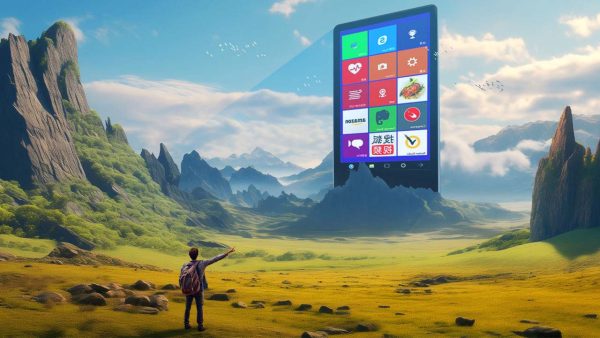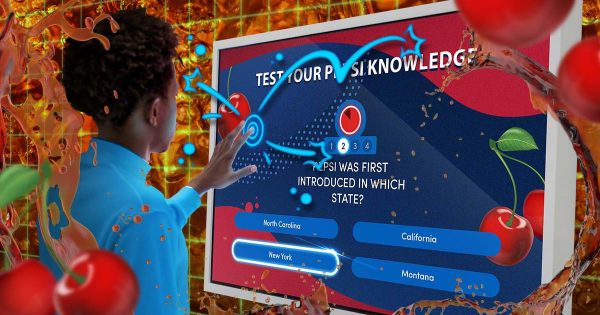
Trade shows are loud, bright, and busy. Attention is scarce. Most booths answer that with bigger screens and more color, hoping something sticks. Games solve the same problem everyday. The only difference is that they win. They attract people from across a room, invite them to act, and reward them for staying. Apply those same principles and a booth stops being a display. It becomes an experience people talk about, and ultimately, come back to with a friend in tow.
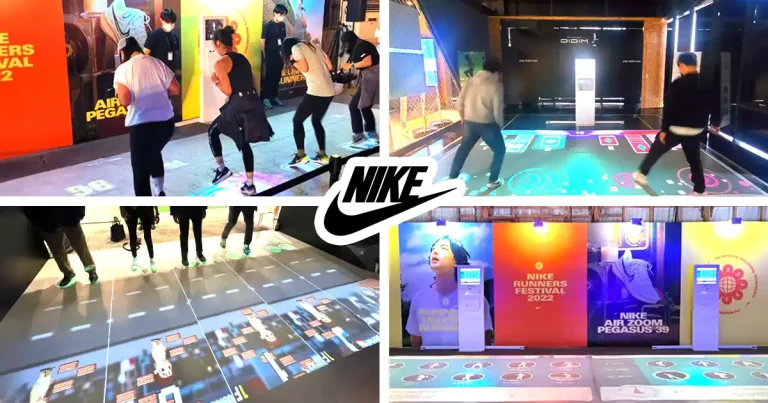
Gamification turns learning into play
The more passive a learning experience, the faster it fades. That’s why we often look to game design to transform digital exhibits from observational into participatory. Points, feedback systems, structured challenges, and straightforward narratives all serve to give visitors a sense of progress, and because of that, motivation.
Arcades popularized an idea called attract mode. Motion, light, sound, and a clear, simple prompt invite a passerby to step closer. This can translate to the showfloor. Imagine, for instance, a challenge that resets on a clock everyone can see.
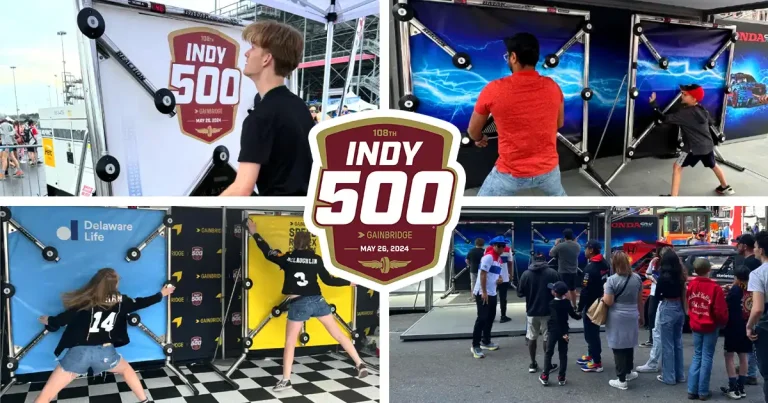
Replace the looping product reel with a Challenge Wall. Give visitors a 60–90 second branded micro-game that surfaces your message as it plays. Run a leaderboard that resets every hour so there is always a fresh race. Announce winners with a short animation that’s visible from the aisle. Players gather. Spectators become players. Staff get a natural opening line that isn’t “Can I scan your badge?”
Engagement lets people spread the message
A kiosk tells, and a game lets visitors try. When content becomes an action, people build memory through doing rather than seeing.
Reframe the usual content as tasks: quick simulations to compare products, or scenario quizzes that reveal the right configuration. Guided tours which surface the reasons behind a spec, not just the spec itself. Then give visitors a link to the same experience so they can circulate it back in the office or at home.
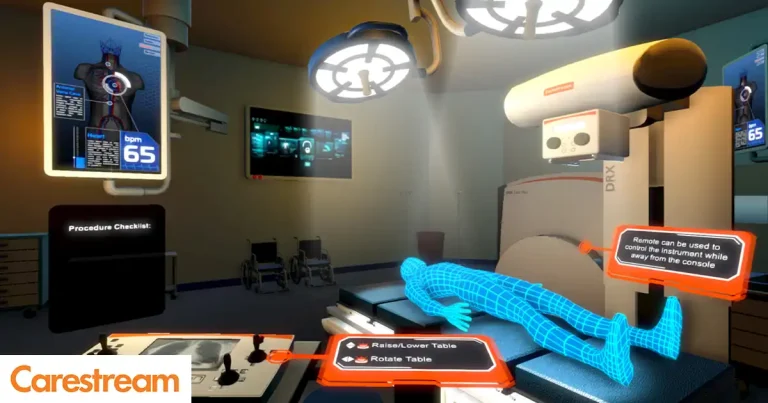
For example, Carestream Health sells X-ray systems that are large, complex, and hard to demo on a show floor. Workinman built a VR tour that simulates a flagship model end to end. Visitors can operate the device in a safe virtual space, with context prompts and embedded sales copy. Even purchasing managers unfamiliar with clinical workflows complete the tour and leave with a working understanding of the product.
The pattern is very simple: people remember what they do. Gamified experiences show higher sustained participation and satisfaction than static content. Even surveys built with game elements see better completion and enjoyment. The show floor rewards the same behavior.
Retention rewards staying
Game designers obsess over stickiness. They build loops that give people a reason to take one more turn. Booths can do the same. Tie small rewards to short actions, and then stack them.
Offer timed challenges with visible progress. Unlock a digital badge when someone completes two demos. Let visitors collect a third badge at a partner booth to finish a set. Use simple visuals so the state is obvious from ten feet away.
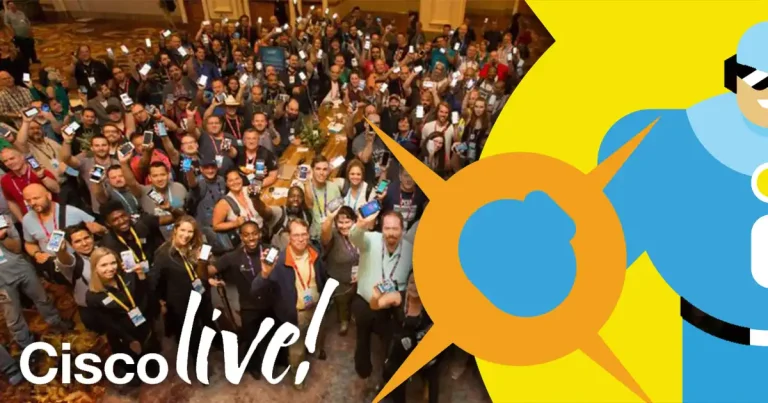
In 2017, for instance, Workinman created a venue-wide digital scavenger hunt for CISCO Live, an annual event hosted for over 28,000 attending IT professionals. Geolocation check-ins and beacons turned the event into a friendly competition. Visitors earned points for attending key moments and finding partners. The result was repeat traffic and a reason to return to the floor later in the day.
Competition and collaboration create buzz
Games run on social momentum. Friendly head-to-head rounds generate noise and smiles. Cooperative challenges turn strangers into teammates, which lowers the social barrier to stepping in.
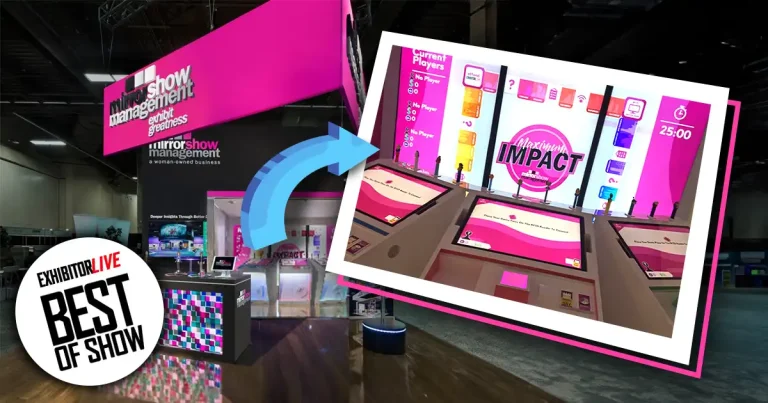
At ExhibitorLive, Workinman produced a live trivia game show on marketing topics. RFID check-ins, a show host, a giant game board, and audience reveals gave the booth a pulse. It won Best in Show. The mechanics weren’t too complex. But the delivery was polished. And the crowd did the rest.
Data you can actually use
Game analytics track playtime, choices, and drop-offs to inform the next build. Treat the booth the same way. Measure dwell time by station. Track which challenge gets abandoned and at which step. Tie a visitor’s chosen path to their role and interests.
A digital leaderboard doubles as a CRM tool when used transparently. Visitors enter a name or scan a badge to join. You collect the context that matters—what they played, what they preferred, and how long they stayed—and you use that to tailor outreach after the show. Count more than bodies. Learn from behavior.
Creative agility keeps pace with events
Game teams iterate fast. They adjust difficulty, visuals, and flow based on real input. They don’t just guess until it works. Trade shows need that mindset because conditions can change as soon as between morning and afternoon.
Build with rapid prototypes and a lightweight content management back end. If aisle traffic slows, shorten the challenge. If lines spike, add a second station or raise the difficulty by a notch. If a visual isn’t scanning from across the carpet, reskin it. Overnight, if you have to.
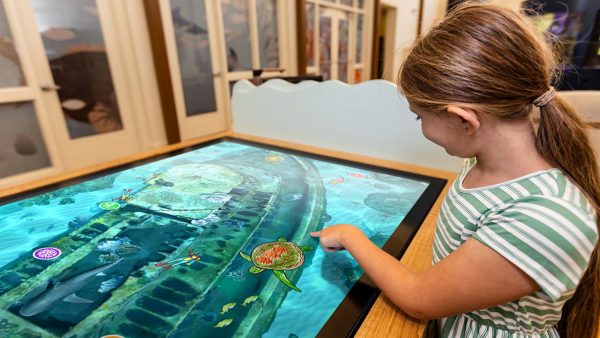
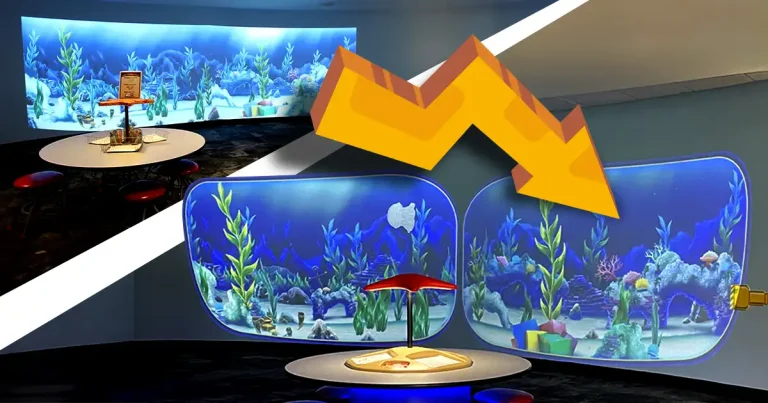
At a museum launch, for example, the projection wall ended up being curved, not flat as initially planned. The image bowed. Workinman wrapped the scene in a thematic frame designed like a diver’s goggles. The distortion then became a feature. Staff members felt heard. Guests were delighted. Agility looks like that. Practical, fast, and in our case, on-brand.
Spectacle marks major wins
Every great game celebrates success. Your booth should too. Trigger a short light sequence and a sound stinger when someone hits a milestone. Fire a branded photo moment at completion so the visitor leaves with a shareable artifact. Keep the reset under five seconds so the next person can jump in without friction.
Small theatrics matter. They signal that the visitor accomplished something real. They also create a reason for someone ten feet away to ask, “What just happened over there?”
Let’s plan your playable booth
If you want a crowd that forms on its own and a follow-up list that writes your first email for you, bring game design (and Workinman) to the floor. We’ll work with you to define the experience end to end: how it draws people in, how they move through it, and how you capture useful insights along the way. Then we’ll build it, test it, and tune it so it’s useful in the wild.
Ready to turn visitors into players? Reach out.